Skincare as Cost-Per-Wear — Why K-beauty Is the Index Fund of Grooming
You wouldn’t pay 3x for the same ETF. So why are you paying $78 for what Korea sells at $21?
You understand cost-per-wear for a Loro Piana cashmere sweater. You understand expense ratios on index funds. Apply the same logic to skincare and you’ll realize Western prestige skincare is the actively managed hedge fund of grooming — high fees, mediocre returns, and you’re mostly paying for the brand name.
The prestige skincare markup is real
La Mer Moisturizing Cream: $380/60ml. The star ingredient is “Miracle Broth” — a fermented algae extract. Peer-reviewed evidence for its superiority over standard moisturizers: zero. Estée Lauder Advanced Night Repair: $78/50ml. Active: bifida ferment lysate + hyaluronic acid. You’re paying for the blue bottle and the department store counter. Korean brands sell equivalent ferment filtrate formulations at 1/4 to 1/7 the price. Not similar formulations. Equivalent ones. Same ingredient families, same concentrations, same clinical evidence.
Case study: SK-II vs Missha
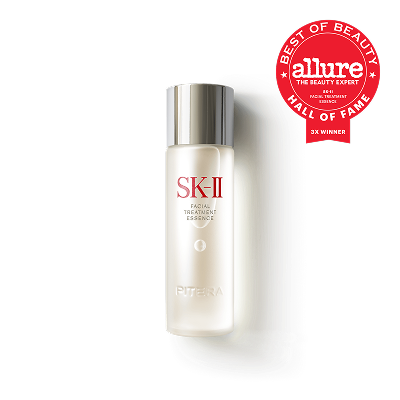
SK-II Facial Treatment Essence: $185/160ml. The “hero” ingredient is Pitera — a galactomyces ferment filtrate discovered in a sake brewery. It’s an excellent ingredient. No argument. Missha Time Revolution First Treatment Essence: $27/150ml. Also galactomyces ferment filtrate. Similar concentration, similar supporting ingredients (niacinamide, adenosine), similar clinical claims. Price per ml: SK-II is $1.16/ml. Missha is $0.18/ml. That’s a 6.4x markup for the same core technology.

Insight
Missha’s First Treatment Essence was literally created as a SK-II alternative. The K-beauty community has been comparing them for a decade — the consensus is that the difference in results is negligible for 85% of users.
The cost-per-use math
Skincare products aren’t one-time purchases. You’re re-buying every 2–3 months. That makes cost-per-use the only metric that matters. Let’s say you use a moisturizer twice daily for 90 days per bottle. A $78 Estée Lauder serum = $0.43/use. A $21 COSRX Snail Mucin (100ml, lasts ~90 days at 2x/day) = $0.12/use. Over 5 years, that’s $786 vs $228 for one product in your routine. Now multiply across 4–5 products.

The index fund approach to skincare
An index fund gives you market returns at minimal cost by eliminating the middleman markup. K-beauty does the same for skincare. Korean and Japanese brands compete primarily on formulation quality, not on marketing spend. COSRX’s marketing budget is a rounding error compared to Estée Lauder’s. That cost difference goes directly into your pocket. Hada Labo Premium Lotion ($14) has 5 types of hyaluronic acid. Drunk Elephant B-Hydra ($49) has one. More isn’t always better, but the price gap should make you question what you’re paying for.

Build the portfolio
Here’s how to think about your skincare portfolio like an asset allocation. Core holdings (70% of budget): cleanser + moisturizer + SPF. These are your index funds — boring, essential, non-negotiable. K-beauty cost: $37–47. Western equivalent: $80–140. Satellite holdings (30% of budget): one active (vitamin C, BHA, or retinol) based on your specific concern. K-beauty cost: $15–25. Western equivalent: $45–80. Total annual spend: K-beauty portfolio runs $180–260/year. Western prestige runs $600–1,000/year for equivalent formulations.
Total cost comparison
Western prestige annual equivalent
$780
K-beauty annual portfolio
$220
Where this lands
You wouldn’t pay a 2% management fee for index fund returns. Don’t pay a 300% markup for department store skincare when Korean labs sell the same science at commodity prices. The formulations are equivalent. The clinical evidence is equivalent. The only difference is the bottle and the counter it sits on.

Tip
Want to see the specific East vs West cost breakdown for YOUR routine? Take the quiz and we’ll show you what you’d pay Western vs what you’ll actually pay.