Japanese Pharmacy Skincare: The Products That Actually Sell in Tokyo
Forget the TikTok hype. These are the products flying off shelves at Matsumoto Kiyoshi.
The skincare aisle at Matsumoto Kiyoshi or Ainz & Tulpe in Tokyo looks nothing like a Sephora. No marble counters. No $90 serums behind glass. Just rows of functional, cheap products with minimal packaging and clinical concentrations. Japanese pharmacy skincare is the opposite of the K-beauty aesthetic that dominates TikTok. It's quiet. It's clinical. It works. Here's what Japanese guys (and women) actually buy.
Why J-beauty pharmacy is different from K-beauty
Korean skincare sells a lifestyle. Japanese pharmacy skincare sells results. There's no 10-step philosophy, no glass skin aspirations, no pastel packaging designed for Instagram. Japanese drugstore products are formulated like over-the-counter medicine — single active, high concentration, proven mechanism. The packaging is often ugly. The product names are utilitarian. And they outsell luxury Western brands in the world's most demanding skincare market by a factor of 10.
The other key difference: Japanese consumers are brutally loyal and brutally honest. A product that doesn't work gets obliterated on @cosme (Japan's massive beauty review platform with 20+ million users). Products that survive have earned it through decades of consistent performance. When something has been a #1 seller at Matsumoto Kiyoshi for 5+ years, that's not marketing — that's molecular proof of concept.
Insight
Matsumoto Kiyoshi is Japan's largest drugstore chain with 1,700+ locations. Think CVS, but the skincare section is 4x larger and the staff actually knows ingredients. Japanese pharmacy culture treats skincare like healthcare, not like fashion.
Takami Skin Peel — The #1 product in Japan that nobody in the West knows
Takami Skin Peel is the best-selling skincare product at Japanese department stores and a perennial top-10 at drugstores. It's not actually a peel — it's a pre-serum softening lotion that uses a blend of fruit acids at low concentration to gently accelerate cell turnover without irritation. You apply it after cleansing, wait 3 minutes, then continue your routine. That 3-minute wait is the entire point: the formula works at skin-pH to dissolve the dead cell layer that makes your skin look dull. Japanese dermatologists recommend it more than any Western exfoliant.
The genius of Takami is what it doesn't do. No tingling, no redness, no purging period. It's so gentle that Japanese consumers use it every single day, morning and night. The cumulative effect after 2-3 weeks is dramatic — pores look smaller, texture smooths out, and other products absorb noticeably better. It's the unsexy product that makes everything else in your routine work harder. r/AsianBeauty regulars who've tried it call it 'the most underrated product in all of Asian beauty.'

Fancl Mild Cleansing Oil — The preservative-free pioneer
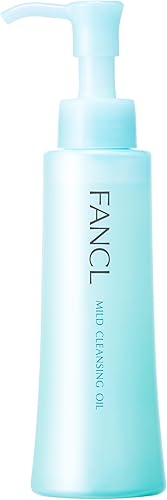
Fancl built its entire brand around one radical idea: no preservatives. Every Fancl product ships with a manufacturing date and a use-by date, like food. Their Mild Cleansing Oil is the #1 oil cleanser in Japan — it dissolves sunscreen and sebum completely, emulsifies cleanly with water, and leaves zero residue. No fragrance, no parabens, no artificial colors. The ingredient list is shockingly short for a product this effective.
What makes Fancl different from Banila Co or DHC is the rinse. Most oil cleansers leave a slight film — Fancl's emulsification technology makes it rinse as clean as a water-based cleanser. Japanese men love it because there's no learning curve: pump it on dry skin, massage for 60 seconds, add water, rinse. Done. The preservative-free formula means you use it within 60 days of opening, which sounds annoying until you realize you're putting fresher, more active ingredients on your face.
Cow Brand Mutenka — The 100-year-old drugstore legend
Cow Brand (Gyunyuu Sekken) has been making soap in Japan since 1909. Their Mutenka line — 'mutenka' literally means 'no additives' — is the definition of Japanese skincare minimalism. The Cleansing Milk removes makeup and sunscreen with a formula so gentle it's recommended for children. No fragrance, no colorants, no mineral oil, no alcohol. The ingredient list reads like a chemistry textbook entry on 'the minimum viable cleanser.'
Cow Brand is what Japanese grandmothers use. It's what Japanese dermatologists recommend to patients with eczema and rosacea. It costs almost nothing. And it works better than most $40 Western cleansers because it does one thing perfectly: clean your skin without disrupting anything. In a market obsessed with innovation, Cow Brand's 100+ years of doing the basics right is its own kind of radical.

Uno Skin Care Tank — What Japanese men actually use
If you want to know what Japanese men actually put on their face, the answer is Uno. Made by Shiseido's men's division, Uno Skin Care Tank is the best-selling men's moisturizer in Japan by a massive margin. The 'Mild' version is a lightweight gel-cream that hydrates without any shine or heaviness. It absorbs in about 5 seconds. Japanese salarymen apply it after shaving in the morning and forget about skincare for the rest of the day. That's the entire routine.
What's interesting about Uno is the formulation philosophy. It's not trying to be anti-aging or brightening or pore-minimizing. It's trying to be the single product a guy will actually use every day. Hyaluronic acid for hydration, citric acid for mild exfoliation, and that's basically it. No fragrance, no complicated instructions, no lifestyle branding. The bottle looks like it belongs in a toolbox. It costs less than a beer at a Tokyo izakaya. This is Japanese men's skincare in its purest form.

Hada Labo Premium Lotion — The hydration layer everything else builds on
We've covered Hada Labo before, but it deserves mention here because it's the connective tissue of Japanese pharmacy skincare. Every routine in Japan starts with a hydrating lotion (remember: 'lotion' means toner in J-beauty). Hada Labo Premium uses 5 types of hyaluronic acid at different molecular weights to hydrate at every skin depth simultaneously. One bottle sells every 2 seconds in Japan. At $14 for 170ml, it's arguably the best value in all of skincare.

The Japanese pharmacy routine
The math
Total cost comparison
Western equivalent (Clinique + Kiehl's + La Roche-Posay)
$240
J-beauty pharmacy routine
$85
Five products, all available at any Japanese drugstore or on Amazon. The Western equivalent — a Clinique oil cleanser, CeraVe cleanser, Drunk Elephant glycolic, Neutrogena Hydro Boost, and Kiehl's moisturizer — runs $240 and doesn't perform as well on any individual step. Japanese pharmacy skincare isn't aspirational. It's practical. And practical is what actually gets used.
Next level
Want to add UV protection to this routine? Layer Beauty of Joseon Relief Sun ($10) or Biore UV Aqua Rich ($10) as the final morning step. Japanese men are religious about SPF — it's the one step they never skip, even if they skip everything else.

Tip
Not sure which J-beauty products match your skin? Our routine quiz includes Japanese pharmacy picks alongside Korean options. Select 'J-beauty' as a preference and we'll prioritize the minimal, functional approach.